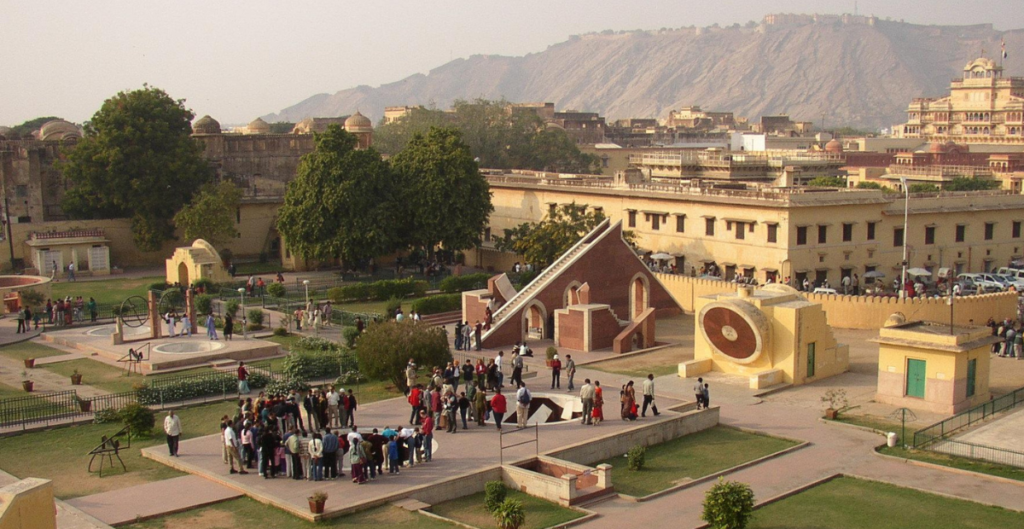
The first is in Jaipur, and it has 12 unique instruments and architectural marvels, from Rashivalaya yantras to the Sundial. For this, visit Jaipur.
In New Delhi, you will get to see another astronomical observatory structure, also called the Jantar Mantar.
It was built in the 1724 by Maharaja Jai Singh 2.
It has 13 architectural structures.
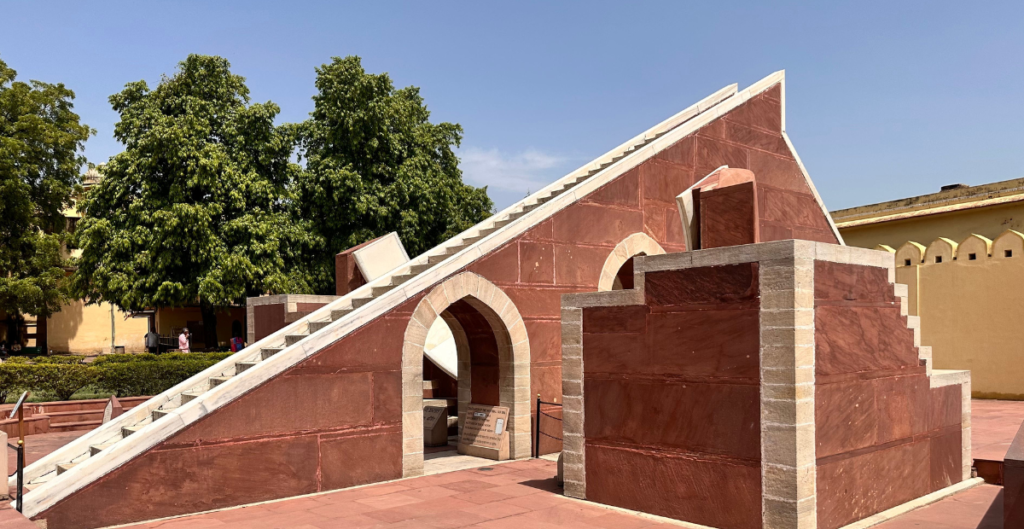
Samrat Yantra, which is a sundial to measure local time. It is 27 meters tall.
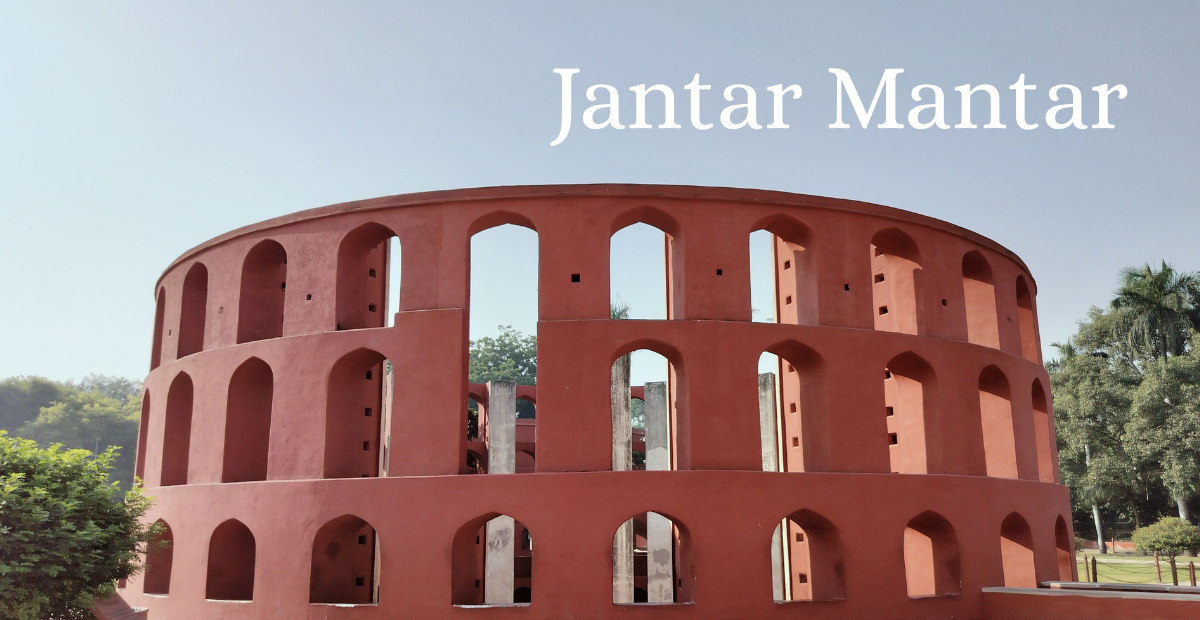
The Rama Yantra here is an open-air building and is circular.
It’s quite large and two in number. It measures the altitude and azimuth of celestial objects. It also has the Jai Prakash Yantra, which is a conclave and has bowl markers with maps and shows the position of the stars and the sun. The Misra Yantra is a different and unique structure as it combines 4 instruments, and it determines the shortest and longest days of the year.
You will definitely need a local guide to help you understand these yantras and make the observations.
Jantar Mantar Ujjain. It is also known as Vedh shala and is again an anciently built astrological site with Observatory instruments. It was built in 1725 by Maharaja Jai Singh. It is active even today for its celestial studies. Can you believe it’s India’s prime meridian, and it is situated near the Tropic of Cancer?
The Surya Siddhanta was calculated here in Ujjain, and it’s the ancient hub for classic astronomical texts to be written. It was again renovated in the 1923 by Maharaja Madhav Rao. Here you will get to see the Samrat Yantra, again a huge sundial to measure local time and see the celestial altitude. Nadi Valaya Yantra shows the sun’s position in the north and south hemispheres. Digamsha Yantra measures the Azimuth and angles of celestial bodies. The Shanku Yantra is used to measure time, shadow lengths, and sun declination.
Head towards Varanasi and you will get to another similar Jantar Mantar called the Man Mahal Observatory. Here, you can also track the celestial bodies, measure local time, and study eclipses. It was again built by the same Maharaja on the rooftop of Man Mahal Palace.
It is close to the River Ganga near the Dashashwamedh Ghat. It has some main core instruments called the Samrat Yantra, Digamsa Yantra, Chakra Yantra, and Daksinottara Bhitti Yantra.
You can also visit the ground floor, which has some exhibits and panels from the ASI, meaning the Archaeological Survey of India.