

Zuluk! Where’s that? Yes Its a village at high altitude and has the most stunning road route in between the clouds. It’s in India itself! and its known as the “Silk Route”. Well Its India’s first Organic state of Sikkim. With its vast bio-diveristy Sikkim is such a view!
A stunner and an apple of the eye for a photographer. In the ancient times, it was part of the Himalayas.
The world’s third-highest peak Mt Kachenjunga also resides here. Sikkim is completely organic and is lush green. Every turn and site with surprise you with its beauty. It is in the Northeast state. It borders Nepal, Bhutan and Tibet, hence it gives a unique blend of culture, customs, and traditions.
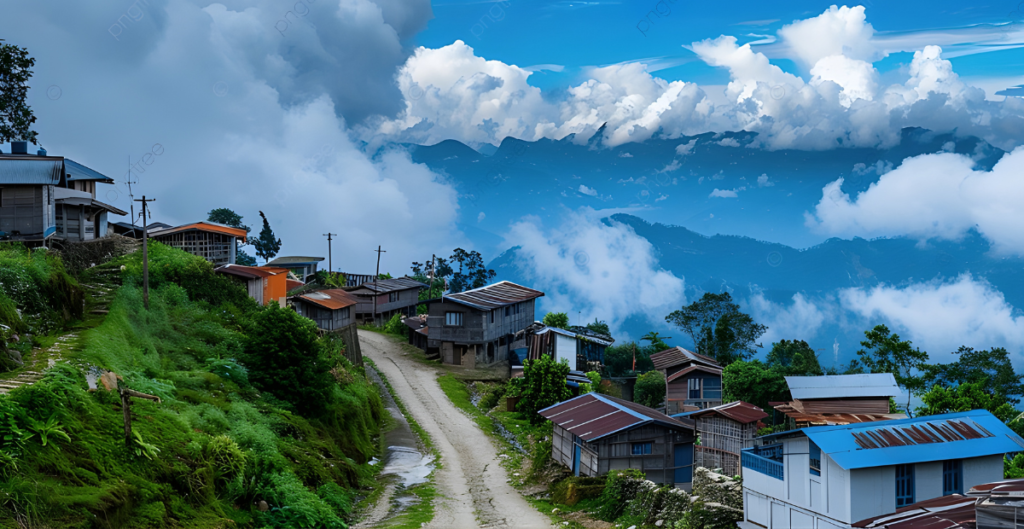
It has lush green flora and fauna, which makes the place picturesque. You might see many red pandas and get your luck on snow leopards. The magic lies when you enter spaces and pastures filled with colorful butterflies thats like 500 species, and beautiful orchids. Its a paradise for nature lovers. Mountaineers go on treks and expeditions here.
Here, plastic is an absolute no-no, so please don’t carry them or any kind of disposable plastic and styrofoams. The people make sure to protect their environment and beauty.
Table of Contents
ToggleWelcome to Zuluk!
A tranquil hamlet thats a total offbeat village. It’s in East Sikkim. Also known as Dzuluk. It’s on a good altitude of approximately 10,000 feet and 3,000 meters on the historic Old Silk Route. It used to connect India and Tibet. It has the famous 32 hari-pin Zig-zag road. It looks like a snake in a drone view.
On the route, you will have some stunning view to the eastern Himalayas and Kanchenjunga. It’s definitely on the bucket list for those who plan to come to Sikkim. It was earlier a transit point as it connected Kalimpong in India and Lhasa, Tibet. It was also a point of trade for salt, silk, and horses.
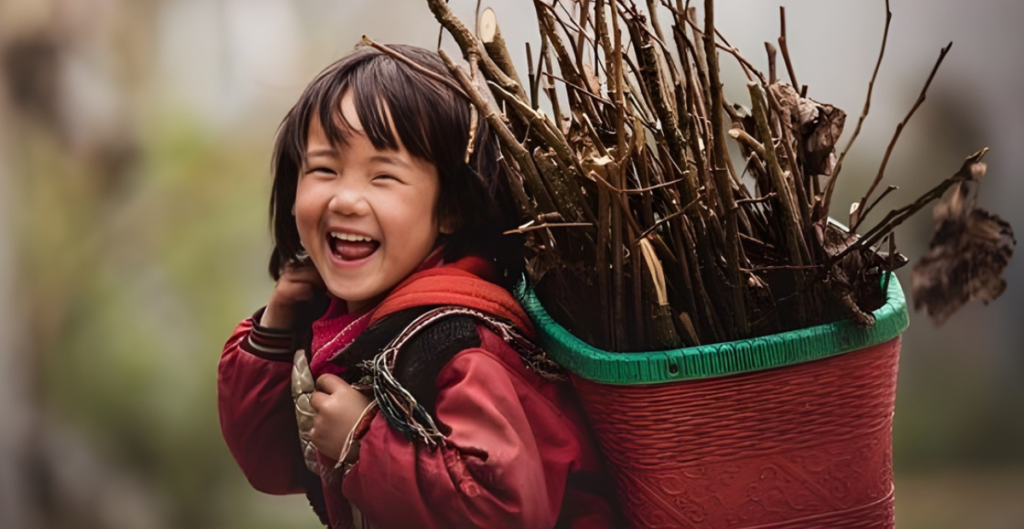
You can still see rocks and paths that were used during the ancient days. It’s a remote destination but a popular one.
Rugged terrains, super bends and turns, yet beautiful. You definitely need to pop an Aviomine to cross that. It gets steeper, too. Dense mist covers and clouds, making it a view not to miss, and a drive one should go for. You can hop out of your cars, spend time clicking pictures, and create some lovely reels too, but definitely on spaces and spots where youre allowed to do so. The sunrise from Lungthung/ Thambi viewpoint/ Kupup Lake, Baba mandir, and Tukla Valley is definitely a yes.
The Silk Road also has heavy snowfall in winters so you can imagine the picturesque view.
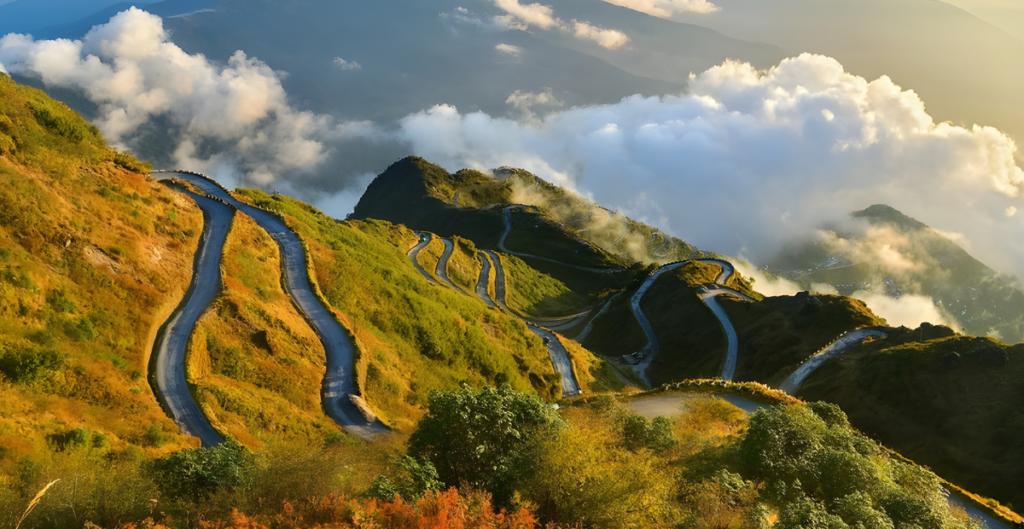
Zuluk has rhododendrons in March to May, and clear sunny weather with some snow-capped peaks in winter. A charm of Sikkim, the Zuluk village is also a must-visit. This village is visible from the route, and you can halt at this remote destination and explore it with locals. There is limited connectivity, hence you will have more time to connect and stay in a homestay and know their culture and traditions.
Some Yak cheese to try, Sel-rotis, and momos. If you like soups, then try some Gundruk green leafy soup or the Sinki radish root soup.Buy some Sikkimese souvenirs from local artisan shops and handmade artifacts.
Some great picks are flags, singing bowls engraved with mantras nd symbolic items depicting the Buddhist culture of the region. Artists have curated some great Thangka paintings on cotton and silk. If you wish to buy some Sikkimese cups, carpets, and woolens, then definitely stop by Gangtok. Opps, but local shops don’t accept digital payments, so it’s better carry cash in hand.
You will have to prepare for this high-altitude environment, especially the cold weather, and for summer as well, so get your winter gear and medicines in place. Keep yourself hydrated and sipping in hot drinks and soups. Oxygen is quite low here, so definitely follow mountain rules and acclimation ways to avoid high altitude sickness.
How was the Silk Route built in Zuluk?
Earlier known as Jelep La, meaning mountain pass was also an overnight base and a route for trade. There was no road but rocks and trails that were used. It was in use in 1959.
It was the only route for trade and connection to transmit cultural exchange into theatre performances, dance, music, and art. Modern and durable roads were built with great difficulty, as they are at a high altitude. It was a great help and ease from the treacherous and steep terrains. It’s easier now for the military and trade accessibility.
In 138 BC, the expedition by Zhang Qian led to the foundation of the first Silk Road.On his way back to China, he discovered this most important achievement for a great potential and possibility for a safe travel route far to the west. There were a lot of engineering challenges as the weather got freezing, mountain slopes, and rugged terrains. But we did it and made it a masterpiece.
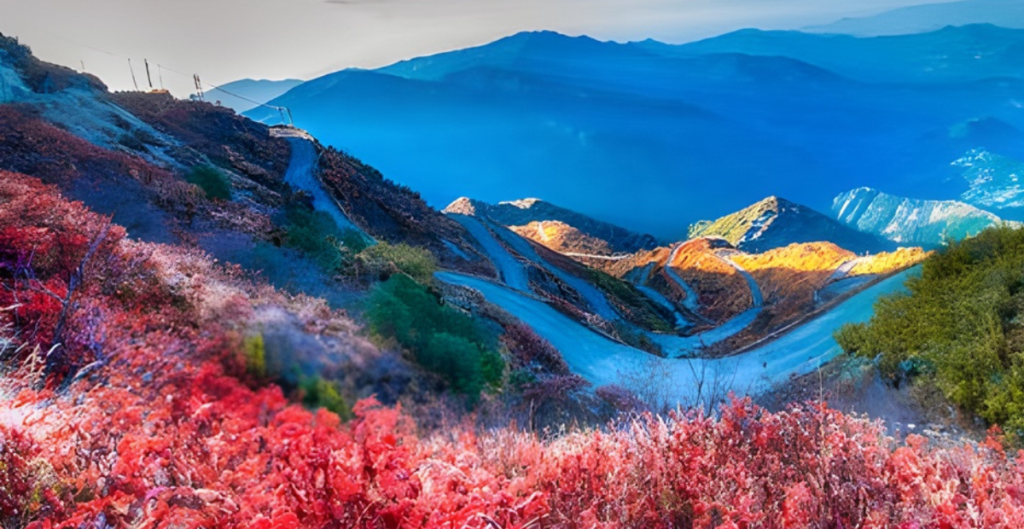
If you wish to drive on Silk Route in Zuluk .
It’s physically quite demanding, and due to its sharper turns, only an expert who knows the route can drive you well. It’s kind of a high-risk driving region. Winters are quite snowy, so don’t drive alone unless you are trained to do so on that route. For a safe ride, it is better to get local drivers with sturdy cars. Like the Mahindra Scorpio, Tata safaris, Toyota fortuners, Hyundai Creta, and Mahindra XUV700. Also, MPVs like the Toyota Innova Crystal or Hycross.
Better to keep in mind to come here only with 4X4’s and AWD. Also, you will need a PAP, which means a permit to enter, and is mandatory for Indian nationals. Smaller hatchbacks can manage, but find it difficult on the rocky patches. Ensure a good service car or taxi you book. Make your plan in such a way that you travel only during the day, and better see the weather forecasts too.
How to reach Zuluk!
Pick a flight ofcourse To Bagdogra airport and then head to Zuluk via Siliguri, GangtokOr Kalimpong. Hit the rails by reaching New Jalpaiguri Railway Station from your city, too, or take a train to Siliguri. We are always up for a road trip, so why not hop into a 4X4 from Sikkim, Siliguri, and Gangtok